Color Analysis Guide
High Contrast vs Low Contrast: How to Tell Which You Are
High contrast vs low contrast is the part of color analysis people find hardest to judge on themselves. Contrast is the difference in lightness between your hair, skin and eyes. A big gap means high contrast, and features that sit close together mean low. Which one you are decides how bold your outfits and makeup can get before they overpower your face.
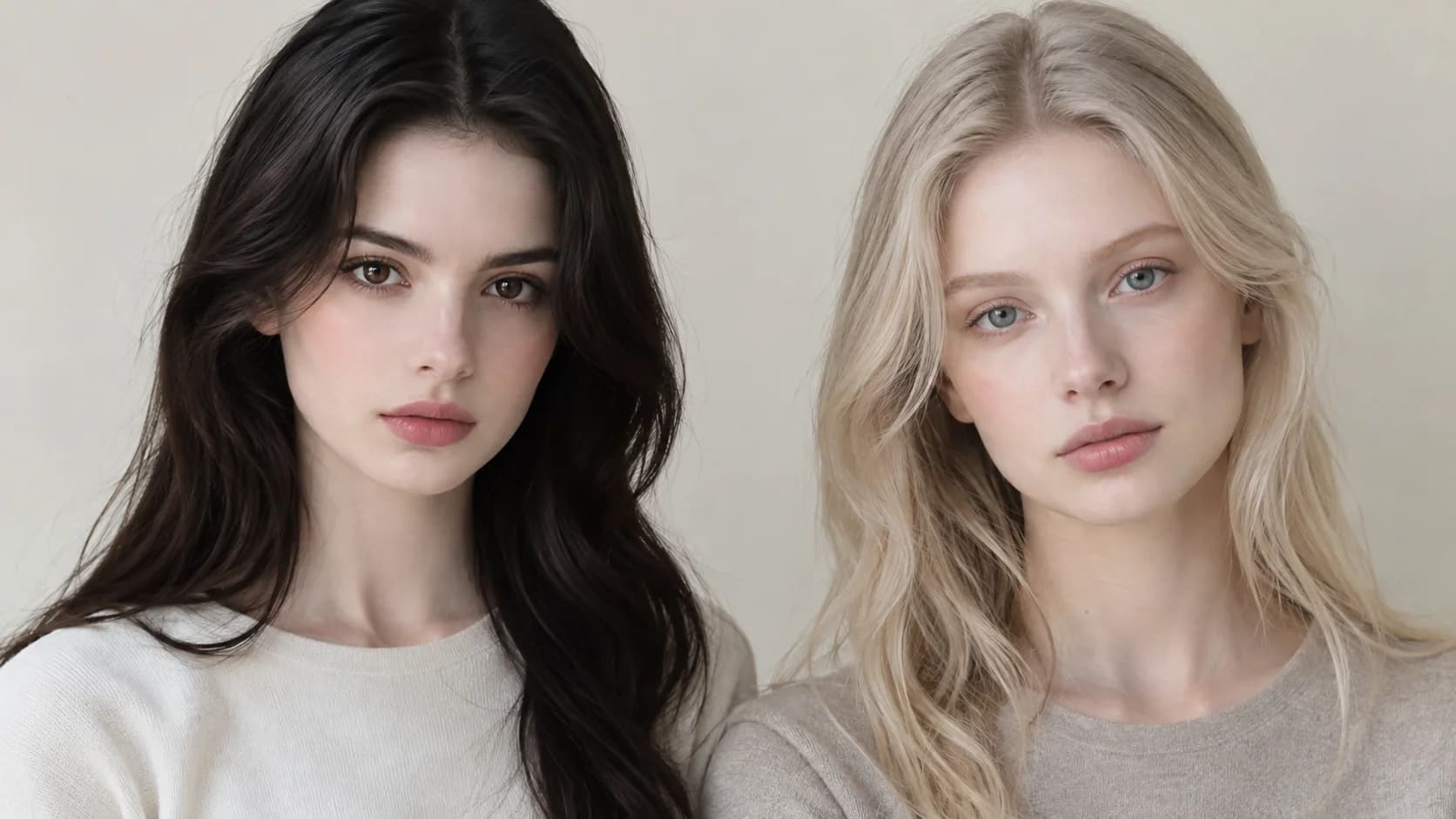
What contrast means in color analysis
Contrast measures lightness, not color. Brown eyes and blue eyes are not a contrast pair. What counts is how light or dark each feature is next to the others, mainly your hair against your skin, with your eyes and brows as a second reading.
It is also separate from undertone. A warm person and a cool person can both be high contrast, so contrast sorts people within a season family rather than between families. In the 16-season system it is one of four axes, alongside undertone, depth and chroma.
The easiest way to see it is in grayscale. Each row below shows hair, skin and eyes with the color removed. Look at how far apart the three circles are.
High contrast · Wide gap
Dark brown hair, fair skin, dark eyes
Medium contrast · Moderate gap
Mid-brown hair, light-to-medium skin, hazel eyes
Low contrast (light) · Narrow gap
Ash blonde hair, fair skin, light blue-gray eyes
Low contrast (deep) · Narrow gap
Black hair, deep brown skin, dark brown eyes
Circles show hair, skin, eyes, left to right.
The last row surprises people. Black hair, deep skin and dark eyes are close together in lightness, so by the strict definition the face is low contrast. The system treats very deep coloring as carrying the same visual weight as high contrast, which is why those types land in the Deep and Dark seasons.
High contrast vs low contrast at a glance
High contrast
- Looks like
- Sharp edges between hair, skin and eyes. Dark hair on fair skin is the classic case; white or silver hair with dark eyes counts too.
- Wears well
- Strong light-dark pairings, saturated color, bold prints.
- Struggles with
- Dusty, tonal outfits can leave you looking faded.
Medium contrast
- Looks like
- A clear gap that is not dramatic, like mid-brown hair on light or medium skin.
- Wears well
- Most things. Moderate pairings suit you best.
- Struggles with
- The extremes at either end: stark black-and-white, or head-to-toe pastels.
Low contrast
- Looks like
- Hair, skin and eyes melt into each other. Soft features with no hard edges.
- Wears well
- Tonal outfits, soft blends, colors close in lightness.
- Struggles with
- Stark black and white, or very dark pieces, which sit on top of the face instead of framing it.
The grayscale test: are you high or low contrast?
You need one photo and about a minute.
- Stand by a window in daylight with no makeup and your hair down. If you dye your hair, show your natural color at the roots.
- Take a selfie, then switch it to black and white with the Mono or Noir filter in your photo editor. Skip every other filter.
- Squint at it, or shrink it to thumbnail size. If your hair and eyes jump out against your skin, you are high contrast. If everything blurs into one soft tone, you are low. If you can tell them apart but nothing jumps, you are medium.
Phone cameras brighten faces, which narrows the gap, so avoid an overexposed shot. Dark brows on pale skin push the result up, so check them too. If you would rather not judge it yourself, the color season quiz asks about it and scores it with your other features.
What a low contrast face looks like
A low contrast face has hair, skin and eyes at a similar depth. The usual picture is ash or light blonde hair, fair skin and light blue, gray or green eyes. Soft brown hair with light-to-medium skin and hazel eyes counts too. Nothing has a hard edge, and the overall impression is gentle.
That softness is why strong colors are tricky. When the outfit is far more dramatic than the face, the clothes become the loudest thing in the picture. The other low contrast case is the dark-on-dark one above, where the depth does the work instead.
Is a brunette high contrast?
Not automatically. Contrast is the gap between hair and skin, and brunette only describes the hair. Dark brown hair on fair skin is high contrast. The same hair on medium olive skin is medium. On deep brown skin with dark eyes it is low in feature contrast, though still a strong, deep look.
Light brown hair on fair skin with light eyes is usually low to medium. A brunette with pale skin and dark brows is probably high contrast. One with a golden tan and hazel eyes probably is not.
Contrast and the 16 seasons
Undertone picks your family and contrast helps pick the sub-season. Light Spring and Light Summer are both low contrast, and what separates them is undertone. These levels are the typical contrast of each season's palette, so a person can sit a notch either side of their season's label.
Low contrast
Medium contrast
True Spring, Bright Spring, Clear Spring, True Summer, Cool Summer, True Autumn
High contrast
Very high contrast
How to dress for your contrast level
The rule that works: match the contrast of your outfit to the contrast of your face. Your face is the focal point, and when the clothes are more dramatic than your coloring, the clothes win. Once you know your season, the next question is which colors look best on you.
If you are high contrast
- +Pair light with dark: a white shirt with black trousers, cream with navy, ivory with deep burgundy.
- +Color blocking, sharp stripes and bold prints hold up against your face.
- +Tone-on-tone looks can disappear on you. Add one contrasting piece.
If you are low contrast
- +Stay tonal: a camel sweater over tan trousers, dusty rose with soft mauve.
- +Keep neighboring pieces within a shade or two of each other.
- +Swap stark black for charcoal, soft navy or deep brown, and use one accent piece instead of a hard split.
Makeup for a low contrast or high contrast face
Undertone sets the shade. Contrast sets how defined it can be.
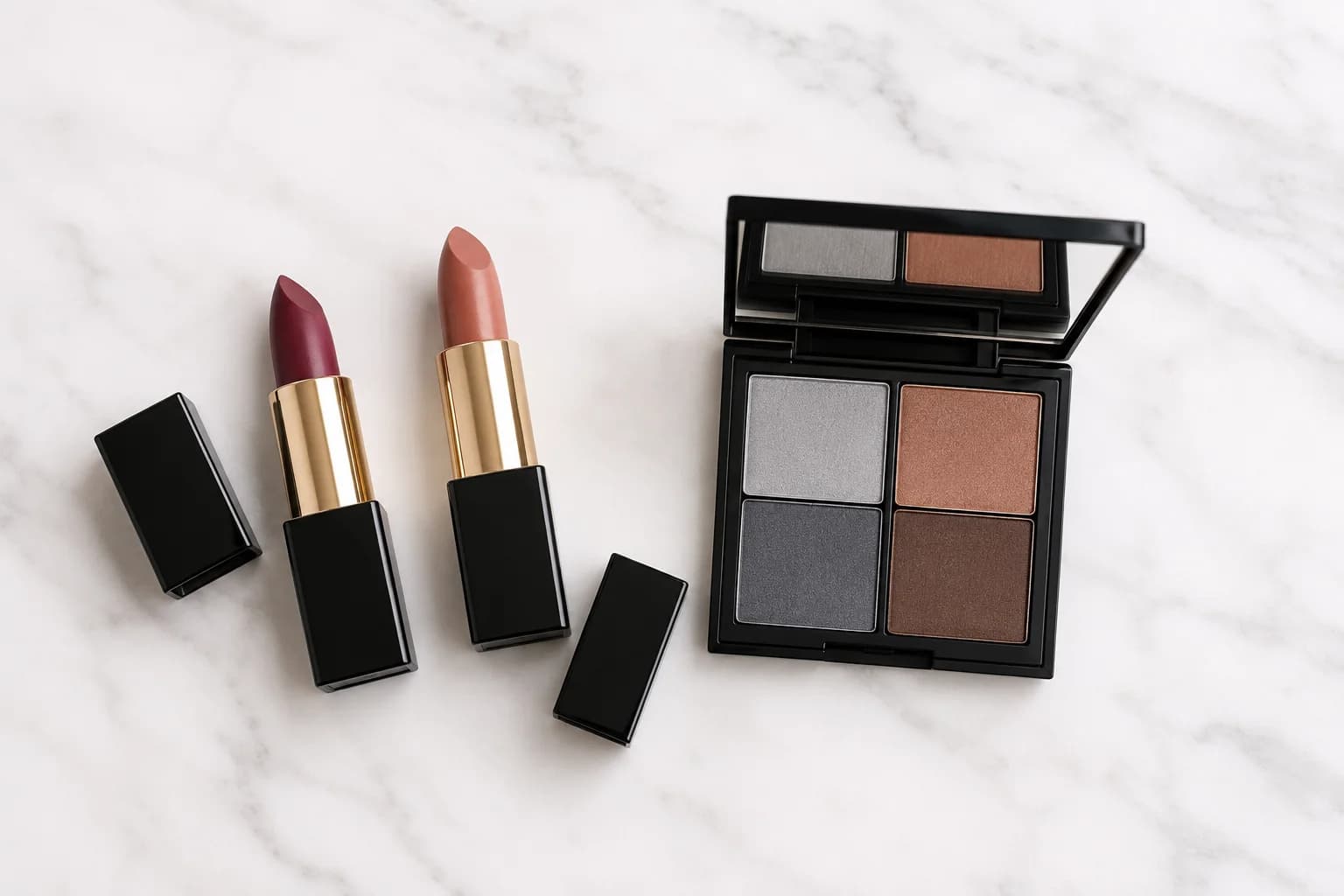
For low contrast makeup, blend everything. Use soft brown or taupe liner instead of black, keep brows close to your hair color, and pick one focal point, either the lip or the eye. A sheer rosy nude or soft berry sits better than a hard red.
A high contrast face can carry definition. Sharper brows, darker liner and a full-strength lip all match the gap already there, and a bare face can look less finished by comparison.
Hair color, age and your contrast
Contrast is the one axis you can change on purpose. Dyeing dark on fair skin raises it, and ash blonde or soft highlights lower it. Graying lowers it too, because the hair drifts toward your skin tone, so many people read one level softer later in life.
For low contrast hair color, stay close to your skin and eye depth and use soft lowlights instead of a stark change. High contrast coloring holds up with dark, saturated or sharply toned hair. Our guide to the best hair colors for your skin tone goes through the options by undertone.
Frequently asked questions
Am I high contrast or low contrast?
Take a daylight photo with no makeup and your natural hair color showing, then turn it black and white. If your hair and eyes stand out sharply against your skin, you are high contrast. If hair, skin and eyes blur into one soft tone, you are low contrast. If you can tell them apart but nothing jumps out, you are medium.
What is a low contrast face?
A face where the hair, skin and eyes are close in lightness, so nothing has a hard edge. Ash blonde hair with fair skin and light eyes is the classic example. Very dark hair on deep skin with dark eyes is also close in lightness, though it reads as strong because of the depth.
Can a brunette be low contrast?
Yes. Brunette only describes the hair. Dark brown hair on fair skin is high contrast, but the same hair on a golden tan with hazel eyes is medium, and light brown hair on fair skin with light eyes is usually low to medium.
Can my contrast change with age or hair dye?
Yes, it is the one axis you can change. Dyeing your hair darker raises contrast against fair skin, while ash blonde or soft highlights lower it. Graying lowers it too, because the hair moves closer to your skin tone. Most analysts judge from your natural hair color.
Does contrast matter more than undertone?
No. Undertone decides your family: spring and autumn if warm, summer and winter if cool. Contrast then helps pick the sub-season and sets how bold your outfits and makeup can be. Getting undertone wrong shows up faster than getting contrast wrong.
Free · 3 minutes · No signup
Find Out Your Contrast and Season
Take the free quiz and get your 16-season result, with contrast scored alongside undertone, depth and chroma.
Take the free quiz →