Undertone Guide
Neutral Undertones
If gold and silver both look fine against your skin, and you’ve never been able to tell whether you’re warm or cool, you’re probably neutral. Here’s what that actually means, and how to make the most of the flexibility it gives you.
What Is a Neutral Undertone?
A neutral undertone means your skin carries a genuine, balanced mix of warm and cool pigment, with neither one dominant. It’s not indecision or a failed test; it’s a real third category, and it’s more common than most color guides let on. A neutral-toned person’s skin doesn’t fight most colors the way a strongly warm or cool complexion fights its opposite.
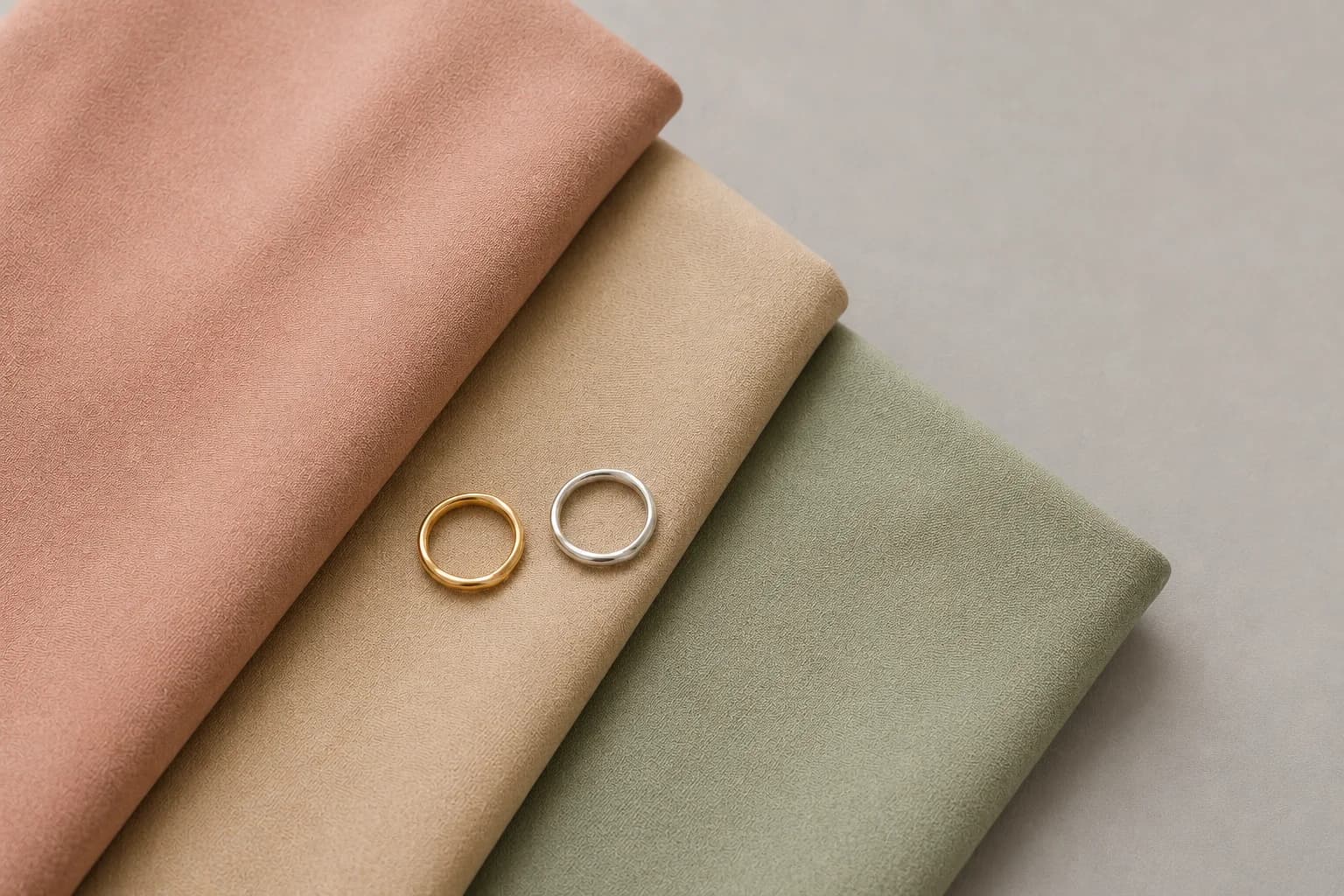
Run the same two checks that sort warm from cool, and expect them to come back split. Veins on your inner wrist read as a real mix of blue and green, not clearly one or the other. Gold and silver jewelry both look about equally good against your skin. If both point to "no clear winner," you’re neutral.
Neutral undertones show up across every eye and hair color. There’s no single tell in eye or hair color the way there sometimes is for warm or cool; the undertone itself is the signal.
Not sure if you're neutral? Run the full five-test check.
Take the undertone quiz →Colors That Work for Neutral Undertones
Neutral skin has more range than any other undertone. Soft, muted shades tend to be the most universally flattering: dusty rose, sage, soft taupe, and mid-tone blues all sit well, since they don’t lean hard enough into warm or cool to clash. Neutral skin can also borrow from both ends: a warm coral or a cool berry can both work, depending on the rest of the outfit or look.
What’s harder to wear is the most extreme version of either temperature. Neon warm orange or icy, saturated blue can occasionally overpower neutral skin, not because they clash the way they would on an opposite undertone, but because they pull focus rather than blend.
Makeup for Neutral Undertones
Foundation is usually the easiest part: look for "neutral" on the label, though many neutral-toned people can also wear a foundation labeled slightly warm or slightly cool without it reading as obviously off.
For blush, soft rose and warm-neutral peach both work, and mixing the two is a common trick to fine-tune the exact shade. On the lips, dusty rose, warm nude, and soft berry all sit well without a strong pull in either direction. For eyes, taupe, soft bronze, and mauve are reliable, and neutral skin tends to be the most forgiving base for experimenting with shades outside your usual range.
Hair Color for Neutral Undertones
Neutral undertones can wear a wider range of hair color than most, since there’s no strong undertone to clash with. Soft or natural-looking shades tend to work best: dark blonde, chestnut brown, and soft caramel all sit comfortably, without needing to be pushed hard toward ash or gold to look right.
The one place neutral skin can run into trouble is at the extremes: very stark platinum or very intense copper can occasionally look slightly artificial, simply because there’s nothing in a neutral complexion pulling toward either end to ground the color.
Neutral Undertones and Color Seasons
Neutral undertone doesn’t sort you neatly into the warm or cool half the way a clear undertone does. Instead, it usually means depth and clarity (how light or dark, how bright or muted your coloring is) will do most of the work in narrowing down your season, and you may find you sit right on the border between two neighboring seasons rather than squarely inside one.
Explore the Other Undertones
See all undertones →Frequently Asked Questions
A neutral undertone means your skin carries a genuine, balanced mix of warm and cool pigment, with neither clearly dominant. It’s a real category, not an inconclusive result.
Check your wrist veins in daylight (a real mix of blue and green, hard to call) and compare gold vs. silver jewelry against your skin (both look about equally good). If both agree, you’re neutral. Our undertone quiz walks through all five signals in under a minute, which is often the fastest way to confirm a neutral read.
Not quite any color, but more than most. Soft, mid-saturation shades from both the warm and cool side tend to work; the most extreme, saturated version of either temperature is where neutral skin is most likely to look overpowered rather than flattered.
No. Neutral is a balanced mix of warm and cool with no visible cast. Olive has a specific greenish tint, which is a distinct undertone rather than a version of neutral.
Soft, natural-looking shades: dark blonde, chestnut brown, and caramel all work well. Very stark platinum or very intense copper are the two extremes most likely to look slightly artificial.
Not directly. Neutral undertone doesn’t sort you into warm or cool the way a clear undertone does, so depth and clarity end up doing more of the work in finding your exact season, and border results are common.
That’s actually a common sign of a neutral undertone: the tests are designed to catch a lean toward warm or cool, and if you truly don’t have one, different tests can point in different directions.
Do you have a Neutral undertone?
Take our free 3-minute quiz to find your exact color season, no email required.
Find My Season →