Undertone Guide
Warm Undertones
If gold looks better than silver against your skin, and you tan gold rather than burn pink, you probably have a warm undertone. Here’s what that actually means, and what to do with it.
What Is a Warm Undertone?
A warm undertone means the base hue beneath your skin leans yellow, golden, or peachy rather than pink or blue. Like cool undertones, it shows up at every depth, from fair to deep skin; what changes is the cast, not whether warmth is present at all. A warm-toned person’s skin has a golden or peachy quality that cool colors tend to fight rather than complement.
There are two quick checks worth running. Veins on your inner wrist read green in daylight. Gold jewelry makes your skin look more awake than silver does. If both agree, you’re warm.
Warm undertones show up across every eye and hair color, though they’re common with brown, hazel, or amber eyes and naturally warm hair tones: golden blonde, auburn, warm chestnut.
Not sure if you're warm? Run the full five-test check.
Take the undertone quiz →Colors That Work for Warm Undertones
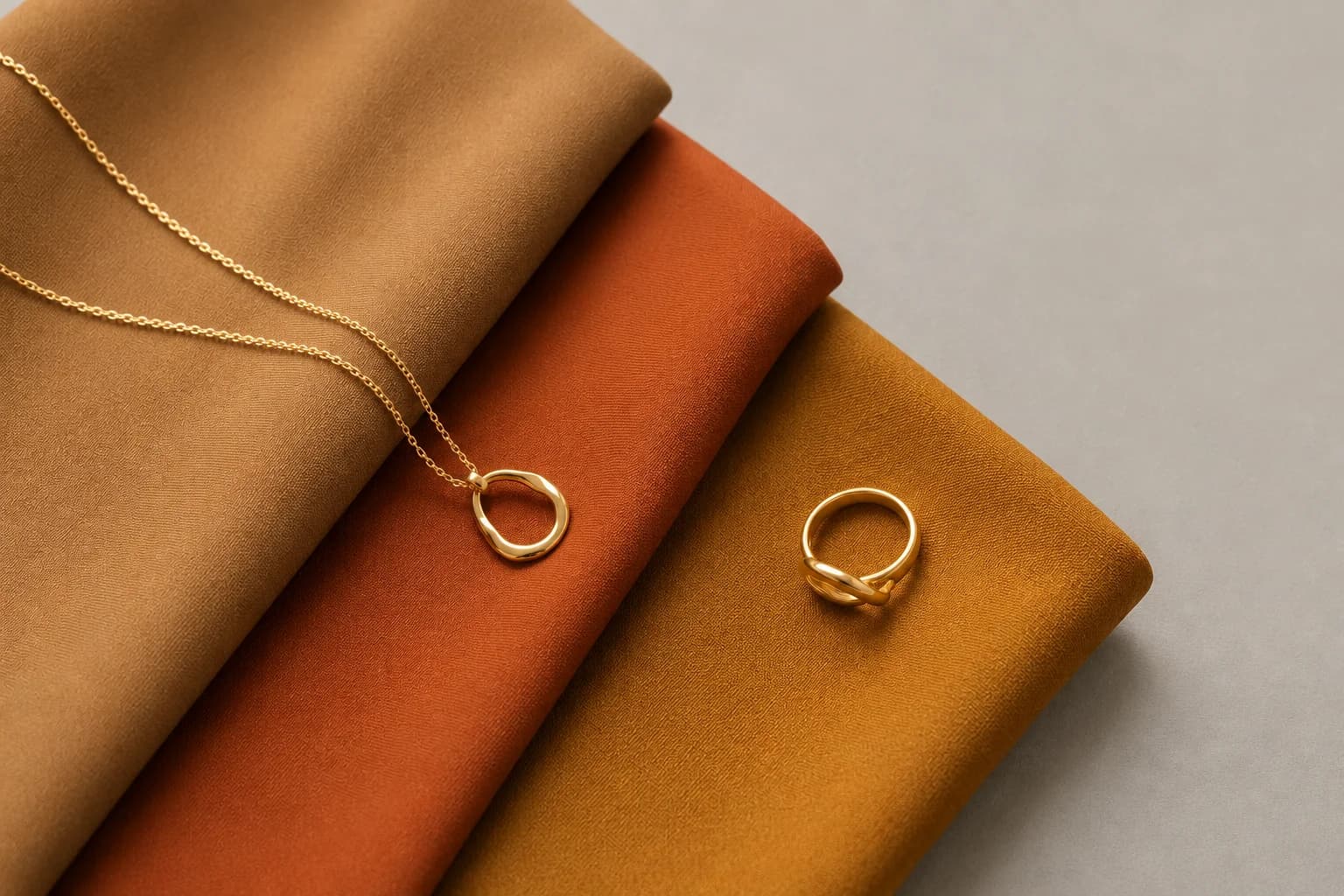
Warm skin comes alive next to earthy, sun-warmed shades: rust, camel, olive green, mustard, warm coral, and peach. Cream and ivory do the quiet neutral work that white and gray do for cool undertones, without the flatness. Gold-based metallics and warm reds like brick or tomato also sit well.
What fights it is anything icy or blue-based. Stark white, icy pink, and cool blue-based jewel tones can leave warm skin looking sallow or washed out rather than glowing, since there’s nothing in the color to meet the gold in the skin halfway.
Makeup for Warm Undertones
Foundation matters most here: look for "warm," "golden," "honey," or "caramel" on the label. A cool or rose-based foundation on warm skin tends to sit gray rather than blending in.
For blush, peachy and warm coral shades give the most natural flush; cool pinks can look slightly chalky against a warm base. On the lips, coral, brick red, warm nude, and terracotta all sit well, while blue-based reds and cool mauves tend to clash. For eyes, bronze, copper, warm brown, and gold work reliably, whereas icy silver or cool taupe shadows can read flat rather than warm-glam on warm skin.
Hair Color for Warm Undertones
Golden blonde, honey, caramel, and warm chestnut all sit comfortably on warm undertones, since the gold or copper pigment is exactly the point. On the red end, auburn and copper are two of the most reliable options for this undertone. Ash and platinum tones tend to be the hardest to pull off here, since they strip out the warmth that’s doing the work.
The rule of thumb is the same one that applies in reverse for cool skin: match the temperature of your hair color to the temperature of your skin. Cool, ashy hair dye pulls warmth away from warm skin and tends to read as gray or tired rather than sleek. It’s the reason a warm-toned person who dyes their hair platinum often ends up looking washed out instead of polished.
Warm Undertones and Color Seasons
Warm undertone is one half of the picture. It’s the dividing line between Spring/Autumn (warm) and Summer/Winter (cool). Within the warm half, how light or deep your coloring is, and how clear or muted your coloring reads, decides whether you land in Spring (clearer, brighter) or Autumn (richer, more muted).
Explore the Other Undertones
See all undertones →Frequently Asked Questions
A warm undertone means your skin’s base hue leans yellow, golden, or peachy rather than pink or blue. It stays the same regardless of your surface skin tone or how tan you get.
Check your wrist veins in daylight (green means warm) and compare gold vs. silver jewelry against your skin (gold means warm). If both agree, you’re warm. The undertone quiz on this site runs the same five checks in under a minute if you want to double-check.
Icy, blue-based shades: stark white, icy pink, and cool jewel tones tend to clash rather than flatter. You can still wear them occasionally, they just won’t do the flattering work that earthy, sun-warmed colors do.
Occasionally, and rose gold in particular bridges the gap better than white gold or platinum does. But as a rule, yellow gold and warm brass tones will do more consistent work for you.
Warm, golden shades: honey blonde, caramel, auburn, copper, or warm chestnut. Avoid ash or platinum tones, which tend to clash with warm skin rather than complement it.
No. Warm undertone just tells you which half you’re in. Spring and Autumn are both warm-undertone seasons, but they differ in clarity and depth, and you need those extra factors to know which one you are.
Skin tone (fair, medium, deep, or tan from sun exposure) describes how light or dark you are. Undertone describes the underlying hue. You can be fair with a warm undertone or deeply tanned with a cool one; they’re independent of each other.
Do you have a Warm undertone?
Take our free 3-minute quiz to find your exact color season, no email required.
Find My Season →