Color Analysis Guide
What's My Color Season?
How to Find Yours
A color season isn't a personality type or a vibe. It's a specific group of colors that work with your natural coloring rather than against it. If you've been asking "what season am I," the answer comes down to four traits — here's how to read them.

What is a color season?
The 16-season color analysis system groups all human coloring into 16 types based on four measurable traits. Each type — called a season — has a corresponding palette of colors that share those same properties. When a color from your palette sits near your face, it works with your natural coloring and makes skin look clearer and more alive. When the wrong color sits near your face, the mismatch shows up as dullness or a washed-out look.
The season names are just shorthand. What actually matters is the four traits behind the label.
The four traits that determine your color season
Undertone
Warm or coolThe most important divider. Warm undertone (yellow, golden, peachy) = Spring or Autumn. Cool undertone (pink, rosy, blue) = Summer or Winter. This single trait cuts the 16 seasons in half.
How to read it: Check the veins on your inner wrist in natural light. Blue-purple reads cool; greenish reads warm. Or hold a piece of gold fabric next to your bare face, then switch to silver. The one that doesn't make you look tired is your undertone direction.
Depth
Light or darkHow light or dark your overall natural coloring is. Light Spring and Light Summer sit at one end; Deep Autumn and Dark Winter sit at the other. Most people fall somewhere in the middle.
How to read it: Look at your natural hair, skin, and eyes together. Ignore your hair dye. If your overall impression is fair and delicate, you're toward the light end. If you have naturally deep, rich coloring, you're toward the dark end.
Chroma
Clear or mutedWhether your natural colors are crisp and vivid (clear) or soft and dusty (muted). Springs and Winters tend toward clear; Summers and Autumns toward muted. This is often the trickiest trait to assess.
How to read it: Look at your natural hair and eyes. Do they have a vivid, defined quality — bright blue eyes, glossy brown hair? Or do they look soft, blended, slightly dusty? Muted types often describe their coloring as "nothing special" or "in between."
Contrast
High or lowHow much difference exists between your hair and skin. High contrast (dark hair, fair skin) points toward the deeper, clearer seasons. Low contrast (close in depth) points toward the softer, lighter seasons.
How to read it: Step back and look at yourself in a mirror. Is the difference between your hair and your skin obvious and striking, or is the overall impression blended and close in value?
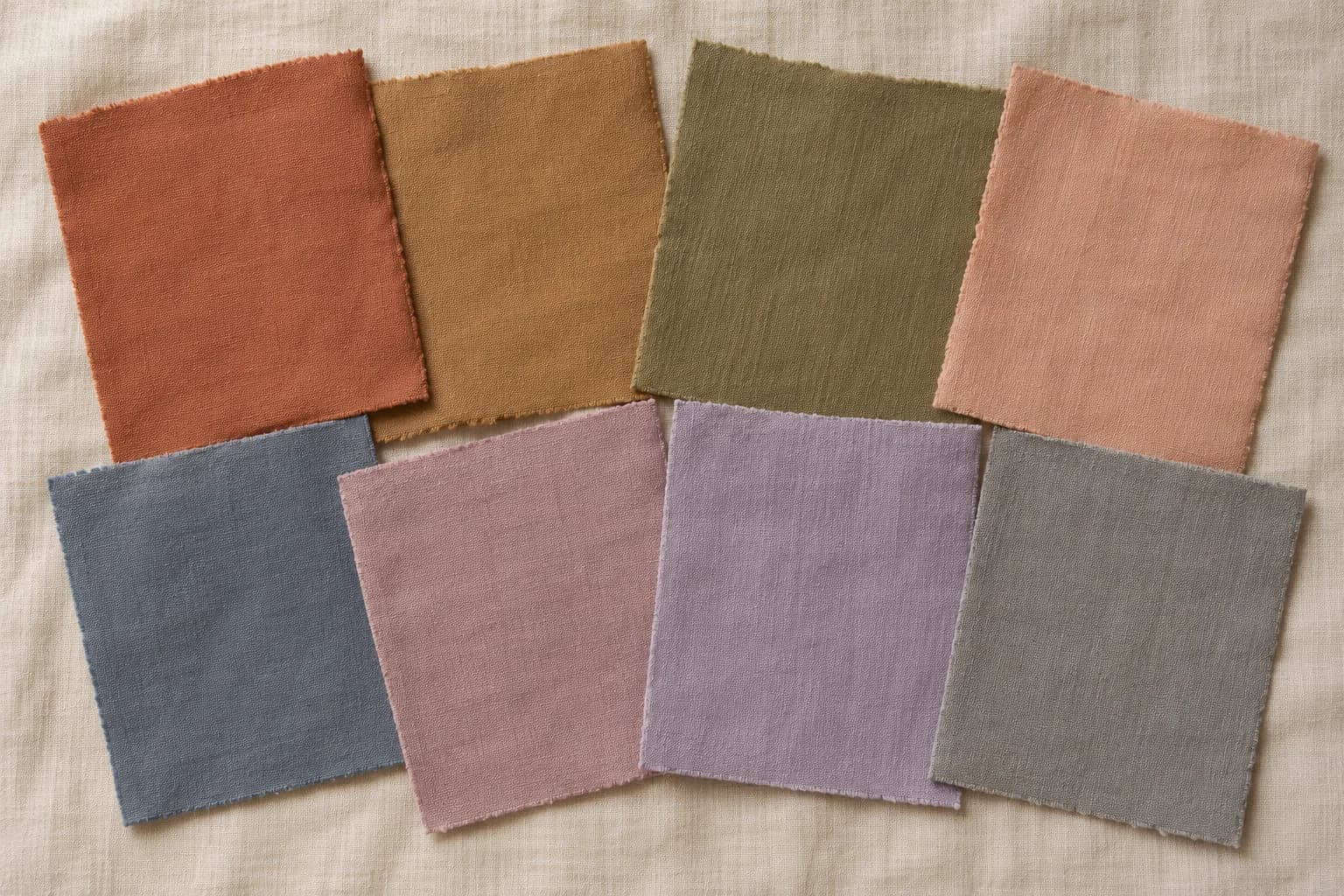
The four season families
Undertone and chroma together define which of the four families you belong to. Depth and contrast then place you within the specific sub-season inside that family.
Spring
Warm + clearWarm undertone, clear chroma. Colors are bright and warm: coral, peach, golden yellow, warm aqua. Three sub-seasons: Light, True, and Bright Spring.
Summer
Cool + mutedCool undertone, muted chroma. Colors are soft and cool: dusty rose, lavender, muted blue, cool gray. Three sub-seasons: Light, True, Soft, and Cool Summer.
Autumn
Warm + mutedWarm undertone, muted chroma. Colors are rich and earthy: rust, terracotta, olive, warm brown, mustard. Three sub-seasons: Soft, True, Deep, and Dark Autumn.
Winter
Cool + clearCool undertone, clear chroma. Colors are bold and cool: icy blue, true white, deep burgundy, cool emerald. Three sub-seasons: Bright, True, Deep, and Dark Winter.
How to find your color season: step by step
Determine your undertone
Undertone is the foundation. Get this wrong and everything else is guesswork. Use the vein test or jewelry test described above. If you're still unsure, hold warm ivory next to your face, then swap in cool soft white. The one that doesn't make you look washed out is your direction.
Assess your depth
Look at your natural coloring in good daylight, without hair dye factored in. Are you fair, medium, or deep? You don't need a precise answer — you just need to know whether you're toward the light end, the middle, or the dark end. This narrows you to a sub-group of seasons within your family.
Assess your chroma
Are your natural colors clear and vivid, or soft and dusty? A high-chroma person tends to have eyes with a definite color and hair with obvious tone. A muted person often describes their coloring as "medium" or "nothing distinctive." If you're not sure, muted is the more common default.
Take the quiz
The three traits above narrow you to a family. The quiz asks more targeted questions — about specific undertone qualities, contrast, eye clarity — that pin down your exact season within that family. It also checks for border seasons, which matter if you sit close to two seasons.
What if I'm between two seasons?
Most people fall clearly into one season. But roughly one in five sit close to the boundary between two neighboring seasons, with traits from each. If that's you, your dominant season is still your primary palette, but you can borrow colors from the neighboring one that shares the same undertone.
The quiz checks for this automatically. If your scores sit close to a boundary, it flags your border season so you know which adjacent palette to pull from when your primary season doesn't have quite what you need.
If you've taken a quiz or seen a professional and the result still feels off, the most common culprit is a misjudged undertone. The undertone article walks through five ways to check it — worth revisiting before assuming the system is wrong.
Frequently asked questions
What is a color season?
A color season is a label for a group of colors that share the same undertone, depth, and clarity — and happen to match your natural coloring. The 16-season system groups human coloring into 16 types based on four measurable traits. Your season is the type whose color properties align with your own.
How do I find my color season without a quiz?
Work through the four traits in order. First, determine undertone (veins or jewelry test). Then assess depth — light or dark overall? Then assess chroma — vivid or dusty? Undertone tells you Spring/Autumn vs Summer/Winter. Depth and chroma narrow you to one of the four seasons within that family.
What if my color season result doesn't feel right?
Check whether you're reacting to a stereotype of the season rather than the actual palette. Spring doesn't mean pastels only; Winter doesn't mean harsh black-and-white. Look at the full palette — specific swatches, not a vague description — and test two or three colors near your face. If it still feels off, double-check your undertone, since that's the trait most people misjudge.
Can your color season change over time?
Your underlying season doesn't change — the four traits are genetic. But your apparent coloring can shift as you age. Hair darkens or lightens, skin warmth can change, natural pigment fades. If a result from years ago no longer fits, retaking the quiz with your current natural coloring (no hair dye if possible) is worth doing.
Free · 3 minutes · No signup
Find Your Season
Take the free quiz and get your 16-season result. Upload a photo or answer 10 questions — you'll get your season, your full palette, and your border season if you sit near a boundary.
Take the free quiz →