Celebrity Color Analysis
True Autumn
Celebrities
True Autumn is warm, vivid, and grounded: copper depth rather than muted earth tones, golden rather than cool. Here are ten celebrities whose natural coloring fits the type, and what the color analysis actually shows for each.
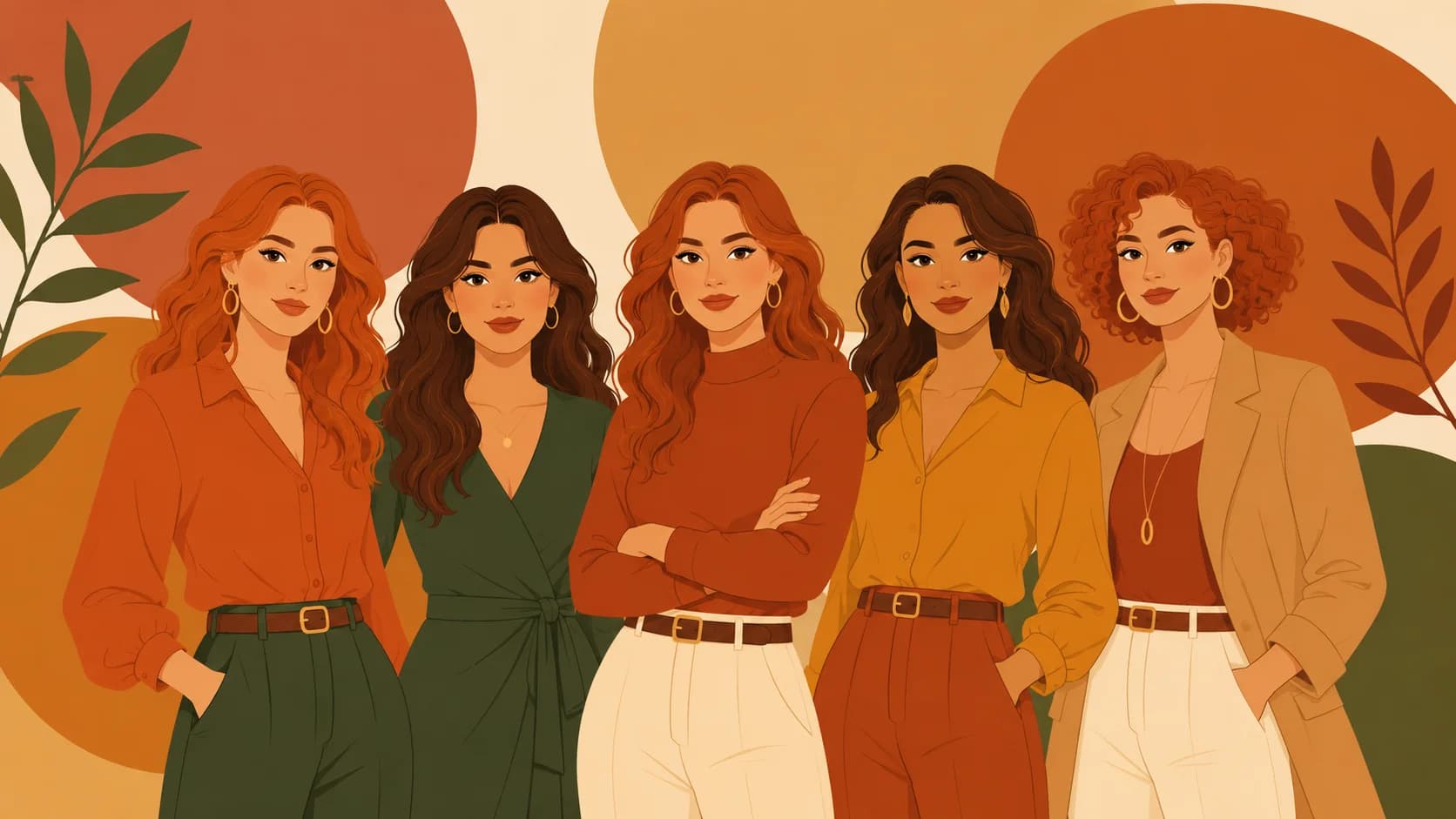
What True Autumn actually means
True Autumn sits at the center of the autumn family: warm undertone, medium depth, and enough chroma to look vivid rather than muted. The useful comparison is Soft Autumn on one side and Deep Autumn on the other. Soft Autumn carries the same warm undertone but at lower saturation — desaturated, earthy, blended. Deep Autumn is warmer and richer still, but adds significant depth. True Autumn splits the difference: warm and vivid, but not dark.
The warm undertone means skin reads golden, peachy, or copper-warm rather than pink-rosy, neutral-grey, or cool-olive. Hair in its natural state is warm — auburn, copper, warm brunette, or warm golden blonde. Eyes tend toward green, hazel, warm brown, or warm blue with golden flecks. The best colors for True Autumn are the vivid warm earth tones: terracotta, burnt orange, warm camel, olive green, copper, amber, and warm rust. Black reads harsh near this coloring; very deep warm brown or espresso usually works better.
For a full comparison of True Autumn against its neighboring seasons, the True Autumn season guide covers each trait in detail.
10 True Autumn celebrities
Amy Adams
Copper-auburn hair, fair warm skin with golden undertones and subtle warm freckles, and blue-green eyes with warm hazel flecks. She is the most frequently cited True Autumn reference in the color analysis community. The combination of vivid copper hair and warm peachy skin is about as clear a reading as this season gets. Terracotta, burnt sienna, warm rust, and deep camel consistently appear in her strongest looks. Cool or icy shades make the warmth in her hair and skin the most obvious element in the frame, because the clothing is pulling in the opposite direction.
Julianne Moore
Bright orange-red hair, very fair warm-freckled skin, and green eyes. The freckles are worth noting: they read copper-gold rather than grey-brown, which is the warm undertone in the skin itself made visible. Her coloring is vivid and unmistakably warm — nothing reads cool or neutral. Deep terracotta, warm rust, rich amber, and forest green appear in her most coherent looks. Cool or muted tones work against everything in her natural palette, and the effect is immediately visible in photos. She and Amy Adams are the two names that almost every True Autumn guide cites first.
Emma Stone
In her natural color — warm light auburn fading toward copper-strawberry blonde — fair warm peachy skin and blue-green eyes. The blue eyes read within the season because the surrounding coloring (warm hair, warm skin) pulls the overall picture clearly into the warm range. Golden amber, warm terracotta, and copper tones look right. Her various dye jobs are useful color analysis data: cool or ashy blondes look slightly foreign on her because they fight the warmth in her skin; her most natural-looking phases are always in warm copper or golden territory.
Jennifer Aniston
A less obvious True Autumn case than the auburn types above, but the warm undertone holds. Her natural undertone is golden rather than neutral or pink — most visible in candid photos without heavy retouching. The golden beach highlights that became her signature in the late 1990s looked natural because they matched the undertone in her skin. Cool or ash-toned dye jobs look slightly off, not dramatically wrong, but clearly borrowed. Warm golden caramel and honey tones are where her coloring is most at home. The medium depth lands her in True rather than Deep Autumn.
Rachel McAdams
Warm medium-brunette hair with natural copper-auburn notes, fair warm peachy skin, and hazel-green eyes. She sits at the more brunette end of True Autumn, not as vivid in hair color as Amy Adams or Julianne Moore, but the warm undertone runs through all three traits. Terracotta, warm caramel, and amber tones look right on her. Her years as a darker brunette for film roles pushed slightly past the season's natural depth range. The hair looked fine, but the contrast against her fair warm skin was higher than what her natural coloring produces.
Jessica Biel
Warm medium-brunette hair, warm medium skin with a golden undertone, and brown eyes. She sits at the warmer and slightly deeper end of True Autumn — some analysts place her at the True/Soft Autumn border because her chroma is moderate. The deciding factor is that her best looks are in vivid warm tones rather than muted ones: burnt sienna, warm amber, and deep camel more natural on her than the desaturated earthy shades that suit Soft Autumn. In cool or pale shades, the warm golden quality in her skin becomes the first thing you notice.
Bryce Dallas Howard
Bright copper-auburn hair, very fair warm-peachy skin, and green eyes. The profile is close to Julianne Moore's — vivid copper hair, warm fair skin, pale eyes. The high contrast between very light skin and vivid orange-red hair is a True Autumn rather than Soft Autumn trait: Soft Autumn's lower chroma softens the contrast; True Autumn's higher saturation makes the copper-against-fair contrast read clearly. Warm rust, terracotta, and burnt sienna are where her coloring looks most coherent. In cool or muted tones, the copper hair becomes an accent fighting the outfit.
Vanessa Hudgens
Warm medium-golden skin, dark warm-brown hair, and warm dark eyes. She sits at the warmer, slightly deeper end of True Autumn — the depth here is a step past the fair-skinned types above, which means she can carry richer versions of the warm palette without being overwhelmed. Warm sienna, amber, and terracotta work consistently well. The warm golden quality in her skin is consistent across different lighting conditions and dye jobs, which is a reliable sign that the undertone reading is accurate rather than an artifact of tan or styling.
Cindy Crawford
Warm medium-golden skin, dark warm-brunette hair with natural warm highlights, and hazel-brown eyes. A useful reference because her coloring is genuinely middle-of-the-road True Autumn — not at the vivid copper-hair extreme, not at the deeper warm-medium edge. The warmth in her hair shows up as natural golden-caramel highlights rather than cool-ash brunette. Warm caramel, amber, and terracotta are consistent in her best looks. The overall picture is warm and clear rather than muted, which separates her from Soft Autumn.
Kate Walsh
Red-auburn hair, warm fair skin, and warm-toned eyes. She sits close to Bryce Dallas Howard in the season profile — vivid warm hair, fair warm skin — though her hair leans slightly more toward warm red than orange-copper. The warm-red quality is consistent with True Autumn rather than the cooler reds that appear in summer seasons. Warm rust, terracotta, and rich forest green appear in her most natural-looking moments. The contrast between fair skin and vivid warm hair is the defining feature of this cluster within the season.
What all of them have in common
Two traits run through the ten above without exception. First: none of them have cool or neutral undertones. Skin reads golden, peachy, or warm-copper in every case. Hair in its natural state pulls warm — auburn, copper, warm brunette — never ash or cool-toned. Second: the chroma is higher than Soft Autumn. The colors that suit them are vivid warm tones, not muted or desaturated ones.
That chroma difference matters in practice. A True Autumn type in Soft Autumn's muted earthy shades looks washed out — the palette undershoots the natural coloring. A Soft Autumn type in True Autumn's terracotta and copper looks overdone — the palette overshoots. The depth is similar between the two seasons; what changes is how saturated the colors need to be.
Look at the styling across this list. The most natural-looking moments are consistently in vivid warm tones: burnt orange, deep terracotta, warm camel, rich amber. Cool shades — grey, lavender, icy blue — create an obvious clash in every case. Not because warm-toned people can never wear cool colors, but because the undertone mismatch shows up in photos regardless of how expensive or well-fitted the garment is.
Could you be True Autumn?
The quick diagnostic: your skin reads golden, peachy, or warm-copper (not pink-rosy, not neutral-grey, not blue-cool). Your natural hair color is warm — auburn, copper, warm brunette, or warm golden blonde, never ash or cool-toned. Your depth is medium: not as fair as a Spring type, not as dark as Deep Autumn. And vivid warm tones look more natural than muted ones.
A practical test: hold a clearly cool fabric (dusty lavender, soft ash-blue) next to your face in natural light, then a warm one (terracotta, copper, warm camel). If the warm version makes your skin look richer and more even, the warm undertone holds. Then compare a vivid warm shade against a muted one — if the vivid terracotta looks better than the dusty camel, the chroma is pointing toward True rather than Soft Autumn.
The 16-season color analysis system covers how depth and chroma interact across all autumn types, which can help clarify whether True, Soft, or Deep Autumn fits your specific coloring.
See the full True Autumn palette — colors, makeup guide, and wardrobe notes:
Common questions
What is the difference between True Autumn and Soft Autumn?
Chroma. True Autumn carries more vivid, saturated warm tones — terracotta, copper, warm rust — while Soft Autumn sits at a muted, desaturated version of the same warm undertone. A Soft Autumn type in True Autumn colors looks overdone; a True Autumn type in Soft Autumn colors looks washed out. Depth is similar; saturation creates the practical difference.
Can blondes be True Autumn?
Yes, if the blonde is warm in tone. True Autumn allows for golden, honey, or warm amber blonde hair. The undertone is the diagnostic, not the hair color. Jennifer Aniston's golden beach blonde fits the season; platinum or ashy blonde would not.
What is the difference between True Autumn and Deep Autumn?
Depth. True Autumn is warm and vivid at a medium depth. Deep Autumn adds darker hair, deeper skin tones, and more intensity. Amy Adams (True Autumn) versus Beyoncé (Deep Autumn) shows where the depth line falls — both clearly warm, but the overall richness differs.
What colors are best for True Autumn?
Warm and vivid at medium-rich depth: terracotta, burnt orange, warm camel, olive green, amber, copper, warm rust, and golden yellow. Black tends to read harsh — very deep warm brown or espresso works better near the face. Cool shades (grey, lavender, icy blue) clash regardless of depth.
Related reading
Free · 3 minutes · No signup
Find Your Own Season
Take the free quiz and see your 16-season result. Upload a photo or answer questions about your natural coloring.
Take the free quiz →