Color Guide
Jewel Tones: What They Are and Which Ones Suit Your Season
Jewel tones are the rich, saturated colors named after gemstones: emerald, sapphire, ruby, amethyst and their relatives. Almost anyone can wear some version of them. The catch is that there are cool, warm, deep and muted versions of each, and the one that suits you depends on your coloring. Below is the full list with swatches, then a breakdown by color season.
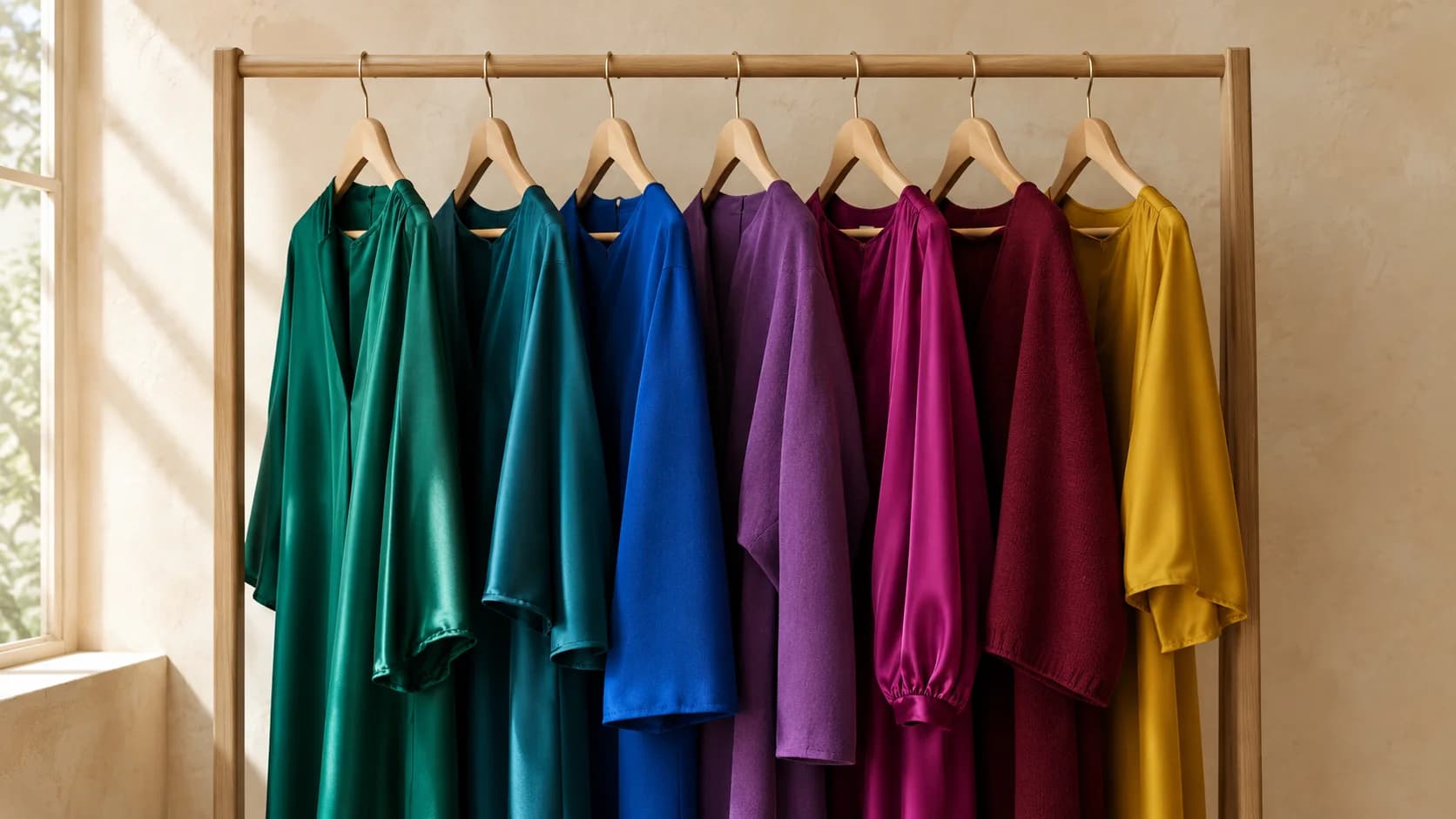
What are jewel tones?
Jewel tones are the deep, saturated colors of gemstones, such as emerald green, sapphire blue, ruby red and amethyst purple.
A jewel tone has two things going on at once. It is saturated, so there is very little gray in it, and it sits at a medium to deep value, so it is never pale. That pairing is what makes the color look like light passing through a cut stone. Make an emerald lighter and it turns into mint. Gray it down and it becomes sage.
Jewel tone colors: the full list
Most lists agree on these eight. Each has a reference shade and hex code you can use when shopping or building a palette.
Emerald #007A4A
Deep, clear green. The most-worn jewel tone.
Sapphire #0F52BA
Saturated royal blue with no gray in it.
Ruby #9B111E
Blue-leaning red, darker than a fire-engine red.
Amethyst #6C3483
Rich violet purple.
Garnet #733635
Brown-red, the warm cousin of ruby.
Teal #00757A
Blue-green, often sold as tourmaline or peacock.
Topaz #C8781E
Golden amber orange.
Citrine #D2A21A
Deep honey yellow, warmer than lemon.
Reference shades. Every gemstone comes in a range, and so does the color named after it.
Jewel tones vs pastels vs earth tones
The three get grouped together because people use them to describe a whole palette at once. The difference comes down to two dials: how light the color is, and how much gray or brown is mixed in. In color analysis that second dial is called chroma, and our color wheel guide explains how it maps to the seasons.
Jewel tones
High saturation, medium to deep value
Emerald, sapphire, ruby
Pastels
Light value, lower saturation
Baby blue, mint, blush
Earth tones
Warm, muted, medium to deep
Terracotta, olive, camel
Are jewel tones warm or cool?
They come in both, and this is where most people go wrong. "Jewel tones" often gets used as shorthand for a cool palette, but only half the list is cool.
Sapphire, amethyst and a blue-leaning emerald are cool. So is ruby when it tips toward raspberry. Topaz, citrine and garnet are warm, and so is any red that leans orange or brown. Teal sits in the middle and goes whichever way its blue or green pushes it.
So "do jewel tones suit me" is really two questions. First, which side of the list matches your skin undertone? Second, can your coloring carry that much saturation? The season groups below answer both.
Jewel tone color palettes by season
Every swatch here comes from the season’s own palette. Each season name links to its full palette.
Cool, clear jewel tones
Cool undertone, high contrast, coloring that can take full saturation.
Deep jewel tones
Cool-leaning and dark. These are the jewel tones with black mixed in.
Warm jewel tones
Warm undertone with enough depth to carry saturated color.
Muted jewel tones
Soft, lower-contrast coloring. Same gem families, with gray softening them.
The seasons not on this list are the light ones and most of the springs. Light Spring, Light Summer and True Spring have delicate coloring, and a full-depth jewel tone tends to sit on top of them like a costume. Bright Spring and Clear Spring are the exception on the warm side. They can wear the clearer, lighter end of the range, such as jade green, turquoise and bright raspberry, just not the dark versions.
Contrast matters too. The deeper and more saturated the jewel tone, the more contrast your face needs to hold its own next to it.
Can soft seasons wear jewel tones?
Yes, but not the versions you see in a gemstone shop. Soft Summer and Soft Autumn have muted coloring: hair, skin and eyes that blend instead of popping. A pure emerald next to that coloring takes over, and people see the dress before the face.
Muted jewel tones fix this. Keep the gem family and add gray. Emerald becomes beryl or bottle green, ruby becomes muted raspberry or earth red, and sapphire becomes soft navy. The color keeps its depth but loses the punch. A quick check in the mirror: if your eyes look brighter, the color is right. If the fabric looks brighter than your eyes, it is too strong.
Do jewel tones suit olive skin?
Usually, yes. Olive skin gets told to "wear jewel tones" more than any other undertone, and the advice mostly holds. The green-gray cast in olive skin makes pastels look chalky and bright warm colors like orange or yellow look sallow. Deep, slightly muted jewel tones have enough depth to sit comfortably next to it.
The safest picks are emerald, deep teal, plum and garnet. Olive skin often lands in Deep Autumn, Soft Autumn or Dark Winter, so check which of those groups above looks closest to you. If your olive skin is light, go for the muted versions. If it is medium to deep, the full-strength ones will usually work.
How to wear jewel tones
With your neutrals
The easiest start. One jewel-tone piece, everything else in a neutral from your palette: an emerald sweater with charcoal trousers, or a garnet blouse with camel.
Two jewel tones together
Emerald with sapphire, or ruby with amethyst. This works best on high contrast coloring, since two saturated colors side by side need a face that can match them.
One accent
A scarf, a bag or a lip color. If a full jewel-tone outfit feels like too much, a single piece near the face does most of the work.
Fabric changes how strong a jewel tone looks. Velvet and satin catch light and look deeper, which is why jewel tones show up every fall and winter, and why a jewel tone dress in either fabric is such a common pick for weddings and holiday parties. Matte cotton in the same shade reads flatter and is easier to wear day to day.
Jewelry follows the same undertone logic. Cool jewel tones look best with silver, platinum or white gold, and warm ones with yellow gold or brass. Our guide to silver vs gold jewelry covers how to tell which metal suits you.
Frequently asked questions
What colors are jewel tones?
The colors of cut gemstones: emerald green, sapphire blue, ruby red, amethyst purple, garnet, topaz, citrine and deep teal. What they share is high saturation at a medium to deep value, so they look deep and clear rather than bright or pale.
Are jewel tones warm or cool?
Both. Sapphire, amethyst, emerald and blue-red ruby lean cool. Topaz, citrine, garnet and orange-leaning reds lean warm. Teal can go either way depending on whether it tips toward blue or toward green.
Can a Soft Summer wear jewel tones?
Yes, in muted form. Full-strength emerald or sapphire will overpower soft coloring, but grayed versions like dusty teal, muted raspberry and soft navy keep the depth of a jewel tone without the punch. Soft Autumn works the same way, with warmer versions.
Are jewel tones good for fall?
They show up every fall because velvet, wool and satin make them look even deeper. The time of year matters less than your coloring, though. A Deep Winter can wear sapphire in July, and a Light Spring will find most jewel tones heavy in any month.
What neutrals go with jewel tones?
Use the neutrals from your own palette. Winters look sharp with black, white and charcoal. Autumns do better with cream, chocolate brown and olive. Soft seasons should pair muted jewel tones with greige, taupe or soft gray instead of stark black.
Free · 3 minutes · No signup
Find Your Jewel Tones
Take the free quiz to get your 16-season result and see which jewel tones are in your palette.
Take the free quiz →