Skin Tone Guide
Skin Tone Chart:
Names, Shades, and How to Find Yours
Most skin tone charts are a single strip from pale to dark. That leaves out half the picture. Two people at the same depth can need opposite colors because their undertones differ, so the chart below has two axes: how light or deep your skin is, and which undertone sits under it.
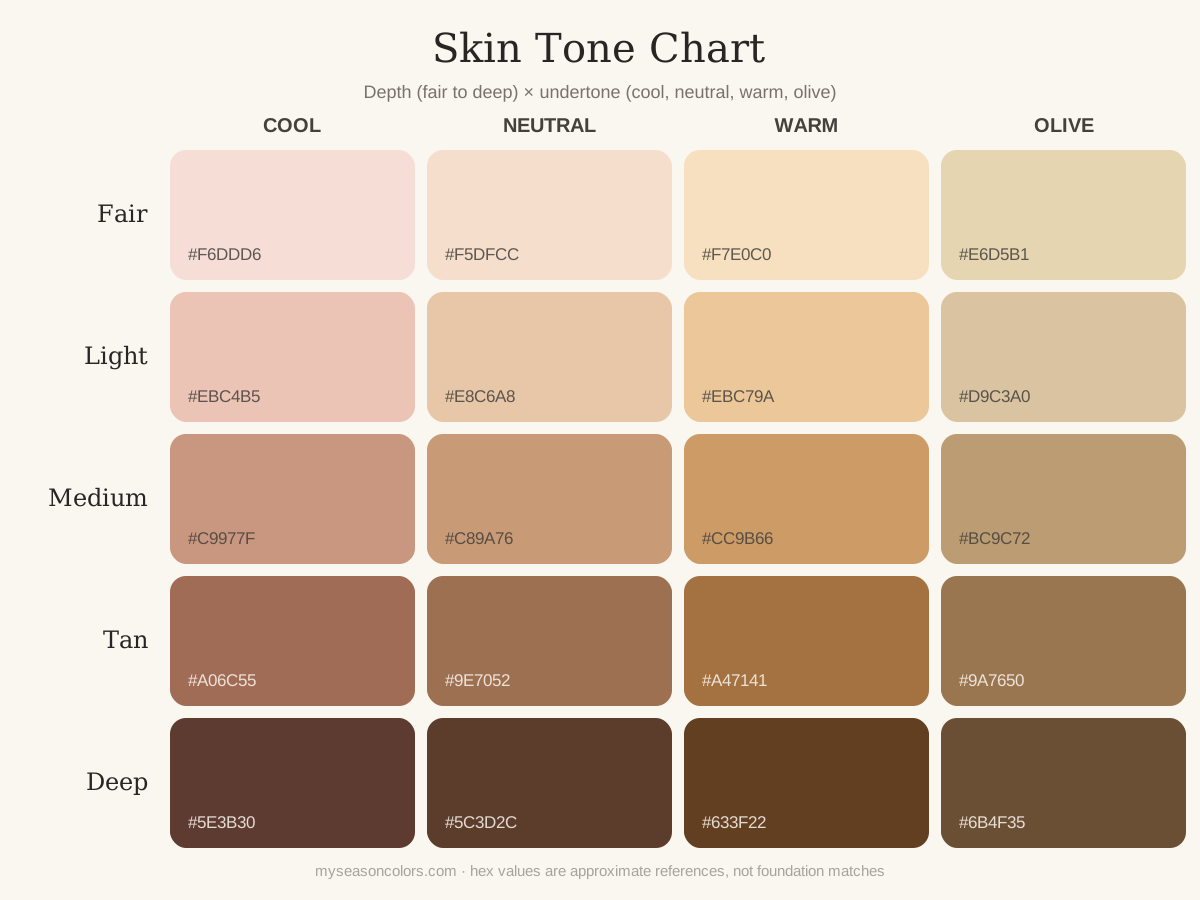
How to Read the Skin Tone Chart
The rows are depth: fair, light, medium, tan, and deep. Depth is what most people mean by "skin tone," and it changes with a tan. The columns are undertone: cool (pink, rosy, or blue-red), neutral (balanced), warm (golden, peach, or yellow), and olive (muted green or gray-green). Undertone doesn’t change with the seasons.
Read across a row and you’ll see why depth alone tells you so little. Cool medium and warm medium skin are about equally deep, but one looks best in plum and the other in rust. When you work out what to wear, both axes matter, and your hair and eye color add a third.
Skin Tone Names, From Porcelain to Ebony
These are the names beauty brands and color analysts use most. They overlap, and different brands draw the lines in different places, but each one points to a depth and an undertone.
Porcelain · #F4E1D8
Fair · cool
Very pale with a pink or rosy cast. Burns quickly, barely tans.
Ivory · #F3E3CB
Fair · neutral to warm
Pale with a soft cream or yellow cast instead of pink.
Beige · #E5C7A5
Light · neutral
The middle of the light range. Tans gradually, sometimes burns first.
Sand · #DDBB92
Light to medium · warm
Light skin with an obvious golden cast. Tans easily.
Honey · #D19E62
Medium · warm
Golden-medium skin that glows in warm light.
Golden · #C99A5B
Medium · warm
Richer and more saturated than honey; looks good next to gold.
Olive · #BC9C72
Medium · olive
Muted green or gray-green cast. Pink foundation turns chalky on it.
Caramel · #B57A48
Tan · warm
Warm tan-brown, the most searched name in this range.
Almond · #A9744F
Tan · neutral
Tan-brown without a strong gold or red pull.
Bronze · #8E5B34
Tan to deep · warm
Deep golden-brown with a metallic warmth in sunlight.
Chestnut · #7A4A33
Deep · neutral to red
Deep brown with a reddish base.
Mahogany · #6A3A2C
Deep · cool to red
Deep skin with a red-violet or cool cast.
Espresso · #4A3024
Deep · neutral
Very deep brown, balanced undertone.
Ebony · #3B2A22
Deepest · cool to neutral
The deepest end of the scale, often with a blue or cool sheen.
Fair and Light Skin Tones
Fair skin burns before it tans, if it tans at all. Light skin burns first and then tans a little. At this depth undertone is easy to spot: cool fair skin looks pink or rosy, warm fair skin looks cream or peach, and olive fair skin looks faintly gray or sallow, which people often mistake for being tired.
Depth on its own doesn’t pick your colors, but it does set a ceiling on how much contrast you can wear without the clothes taking over. Fair and light skin usually looks best in light-to-medium shades, unless dark hair and eyes add contrast of their own. That’s the difference between a Light Summer and a Bright Winter, who can both have very fair skin.
Medium Skin Tones
Medium skin tans easily and rarely burns badly. This is where the undertone families pull furthest apart: honey and golden skin read clearly warm, olive reads green-gray, and cool medium skin has a rosy or slightly red cast that can look almost neutral in artificial light.
Medium skin handles a wide range of color depth, so undertone and chroma do most of the work. Warm medium skin usually wants earthy, golden colors; cool medium skin looks better in berry, plum, and blue-based reds.
Tan and Olive Skin Tones
Tan skin is golden-brown to brown and almost never burns. Caramel, almond, and bronze all sit here. Olive gets its own column on the chart because the green-gray cast shows up at every depth, from fair olive to deep olive, and because it’s the undertone most standard "warm or cool" advice gets wrong.
If pink foundation turns chalky on you, gold jewelry looks right but silver looks faintly gray, and your veins are hard to call blue or green, you’re probably olive. Olive skin usually looks best in moss green, bronze, terracotta, and deep jewel tones.
Deep Skin Tones
Deep skin ranges from rich chestnut to ebony. The vein test is hardest to read here, so undertone shows up more clearly in other ways: a red or golden glow (warm), a blue or violet sheen (cool), or an even, balanced brown (neutral). Mahogany and ebony often lean cool; bronze often leans warm.
Deep skin carries saturated, high-chroma color well, and the old idea that it should avoid bright colors is simply wrong. Pastels can work too, as long as the undertone matches. What matters more is whether the color is clear or muted, and warm or cool.
How to Find Your Skin Tone
Start with depth. Stand by a window in daylight, with no makeup, and compare your jawline (not your hand, which is usually tanner) to the rows on the chart. If you’re torn between two rows, pick the lighter one in winter and the deeper one in summer. That gap tells you how much you tan.
If you still can't decide, sun reaction is a good tiebreaker: fair skin burns and barely tans, light skin burns then tans, medium tans easily, and tan and deep skin rarely burn. Dermatologists use a version of this, the Fitzpatrick scale, to sort skin by sun reaction. Your last well-matched foundation also helps, since most brands number their shades from light to deep.
Depth won't tell you your column, though. For undertone, use the vein test, the gold-versus-silver jewelry test, and the white-paper test, or let the quiz run them together.
Know your depth but not your column?
Take the undertone quiz →What Your Skin Tone Means for the Colors You Wear
Undertone decides temperature: warm skin suits golden, earthy colors, cool skin suits blue-based ones, and olive and neutral sit somewhere in between. Depth, together with your hair and eyes, decides how much contrast and saturation you can carry.
Put those together and you have most of a color season. A fair, cool person with ash-brown hair is probably a Summer; the same skin with near-black hair is more likely a Winter. Seasonal color analysis is really just this chart with hair, eyes, and chroma added.
Frequently Asked Questions
Most charts use five depths: fair, light, medium, tan, and deep. Each of those can have a cool, neutral, warm, or olive undertone, which is why a good chart is a grid rather than a single strip from light to dark.
Skin tone is how light or deep your skin looks on the surface, and it shifts with a tan. Undertone is the hue underneath (pink, golden, balanced, or green-gray) and stays the same all year. Two people with the same skin tone can need completely different colors because their undertones differ.
Look at your jawline in daylight with no makeup and compare it to the depth rows on the chart. Your foundation shade and how quickly you burn both help narrow it down. Then check your undertone separately with the vein, jewelry, and white-paper tests, or take our undertone quiz.
Medium skin sits in the middle of the scale: clearly not pale, not yet tan-brown. It tans easily and rarely burns badly. Honey, golden, and medium olive are all medium skin tones with different undertones.
Fair is the lightest depth on the chart. Fair skin burns easily and tans slowly or not at all. It can still be cool (porcelain, pinkish), warm (ivory with a cream cast), neutral, or olive.
They are approximate. Real skin is translucent and changes with light, so no single hex code matches a person. The codes on this chart are useful references for comparing depths and undertones, or for illustration, but not for matching foundation.
Free · 2 minutes
Find Your Spot on the Chart, and Your Season
The color analysis quiz combines your skin tone, undertone, hair, and eyes into one of 16 seasons, with the palette that goes with it.
Take the free quiz →