Color Analysis Guide
How to Find Your
Color Palette
A personal color palette isn't something you invent. It comes from your natural coloring — and once you know your season, the palette follows. Here's how to find it and actually use it.
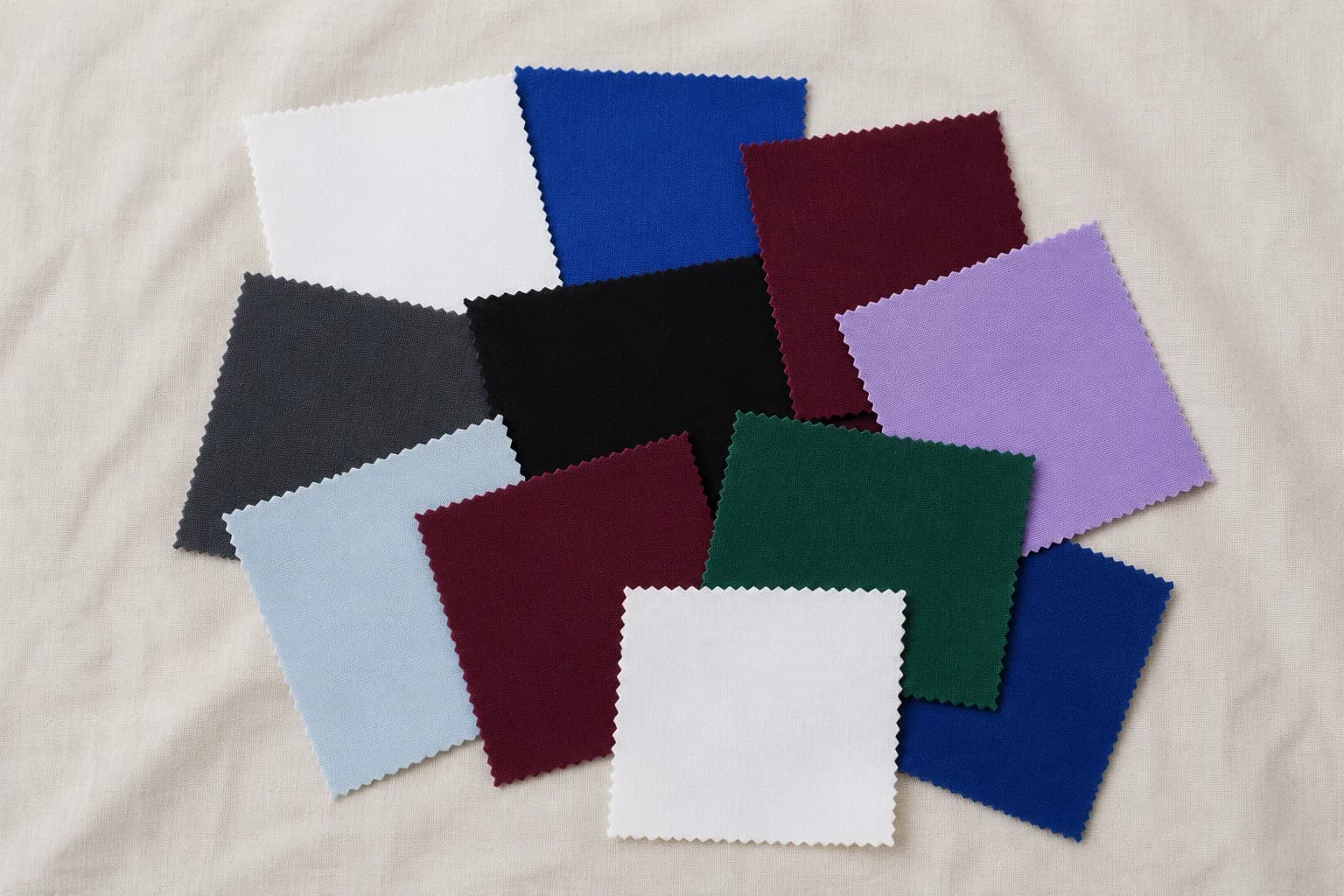
Why your palette comes from your season
Every color has a temperature (warm or cool), a depth (light or dark), and a clarity (vivid or muted). Your natural coloring has the same three qualities. When a color shares those qualities with your coloring, they reinforce each other. When they conflict, your skin tends to lose.
That's why a True Winter and a True Autumn can both wear deep colors, but the Winter looks striking in icy jewel tones while the Autumn looks washed out in them. The depth is the same; the temperature and clarity are different.
Your season identifies which combination of temperature, depth, and clarity describes your natural coloring. Your palette is every color that shares those qualities. The palette follows from the coloring.
Step one: find your season
You can't find your color palette without knowing your season first. The season is the input; the palette is the output.
To identify your season, you need to assess four things: your undertone (warm vs cool), your depth (light vs deep coloring), your clarity (clear and vivid vs soft and muted), and the contrast between your features. Work through those in order. This guide walks through each step.
Once you have your season, the palette is already defined. You're not building it from scratch. You're looking it up.
What your season palette contains
A full season palette typically runs 30–50 colors. That sounds like a lot, but it's organized into three layers, and most practical decisions come from the top two.
Statement colors
The strongest colors in your palette — the ones that do the most work near your face. For True Winter, this is icy blue, deep burgundy, vivid cool green. For Soft Autumn, it's terracotta, warm olive, muted rust. These are your go-to tops and outerwear.
Neutrals
Foundational pieces that mix with everything else: your best white, your best grey or beige, your best dark. Every season has its own version of these. True Winter's best neutral isn't cream; it's pure white or true black. Soft Summer's isn't stark white; it's off-white or warm taupe.
Accent colors
Smaller doses: accessories, scarves, bags. These can include colors from the edge of your palette that would be too much as a full outfit but work as a detail.
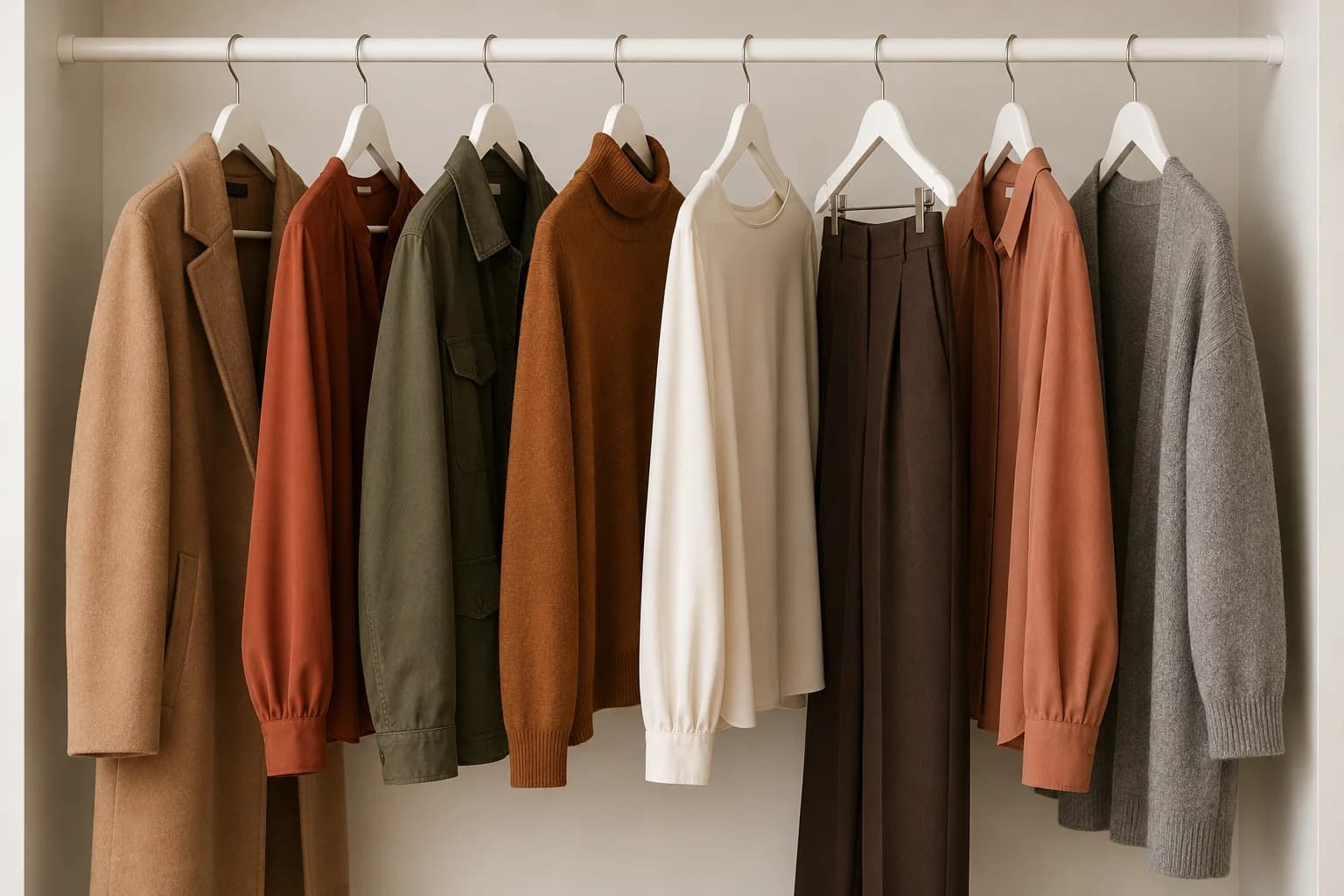
The colors to cut — and what that actually means
Every season palette includes an avoid list. These are colors where the temperature or clarity directly conflicts with your coloring — warm oranges for a cool Winter, icy pastels for a warm Autumn.
The avoid list isn't a ban. Wearing an off-palette color below the waist, in a small accessory, or in a dark neutral context often works fine. The main place it matters is near your face — tops, scarves, jackets, blouses. That's where color interacts directly with your skin and eyes.
The practical value of knowing what to avoid is mostly in shopping. You can filter out entire sections of a store without trying things on. If you're a cool Summer and you know warm yellows and oranges don't work for you, you walk past that rack. That's time saved, not freedom lost.
Building a palette you'll actually use
Knowing your full season palette is useful. Using it is a different skill. The shortcut that actually works: pick 8 statement colors from your palette and 5 neutrals. Those 13 create over 40 outfit combinations, because every statement color works with every neutral and vice versa.
The 8+5 constraint also solves a common wardrobe problem: buying colors you love individually but that don't work together. If all 13 items come from the same season palette, they will mix. You stop ending up with things that only work in one specific combination.
Start with what you already own. Most people are surprised how much of their existing wardrobe falls within their palette. Identify those pieces first, then fill gaps deliberately. Understanding why certain colors flatter you makes the selection process faster.

How to use your palette while shopping
Online: use color filters strategically
Search by color family, not product name. Instead of "blue blouse," filter for "icy blue" or "cobalt" depending on your palette direction. Most major retailers use consistent color labeling. Warm types filter for: camel, rust, olive, peach, warm brown. Cool types filter for: slate, dusty rose, navy, cool grey, lavender.
In-store: the wrist test
Hold the item against your inner wrist rather than in front of your face. Your wrist has thinner skin, which makes undertone readings more reliable. If the item seems to disappear against your skin (no contrast, no reaction), it's working with your coloring. If your veins look more prominent or your skin looks off, it's fighting you.
Ignore what 'goes together' on the hanger
Two colors that look good together on a rack don't necessarily look good together on you. Your coloring is the third element. A warm orange and a cool grey might be a technically interesting combination — but if you have cool undertones, the orange still drains you, regardless of the grey.
Common questions
How many colors should be in my personal color palette?
A full season palette is 30–50 colors. A practical wardrobe palette is smaller: around 8 statement colors and 5 neutrals. Those 13 create enough combinations to cover most dressing decisions without feeling restrictive.
Can I wear colors outside my palette?
Yes. Your palette is a filter, not a rule. Wearing an off-palette color doesn't ruin an outfit. It just means you're competing with your coloring rather than working with it. Some people make deliberate trade-offs for a color they love, and that's fine.
What's the difference between a color season and a color palette?
Your season is a category that describes your natural coloring. Your palette is the practical set of colors that work for that category. The season tells you which group you're in; the palette is the tool you take shopping.
Do I need to buy new clothes to follow my color palette?
No. Start by identifying what you already own that falls within your palette. Most people are surprised by how much does. Use the palette as a filter going forward — before you spend — not as a reason to clear out what you have.
Free · 3 minutes · No signup
Get Your Color Palette
Take the free quiz and get your season, your best colors, and your avoid list. No email, no credit card.
Take the free quiz →