Color Analysis Guide
What Is Color Draping
in Color Analysis?
Color draping is the technique behind every professional color analysis session. A consultant holds bolts of colored fabric near your face and watches how each one interacts with your skin. Here's what actually happens, what a color analysis draping kit contains, and how to replicate it at home.
What color draping actually is
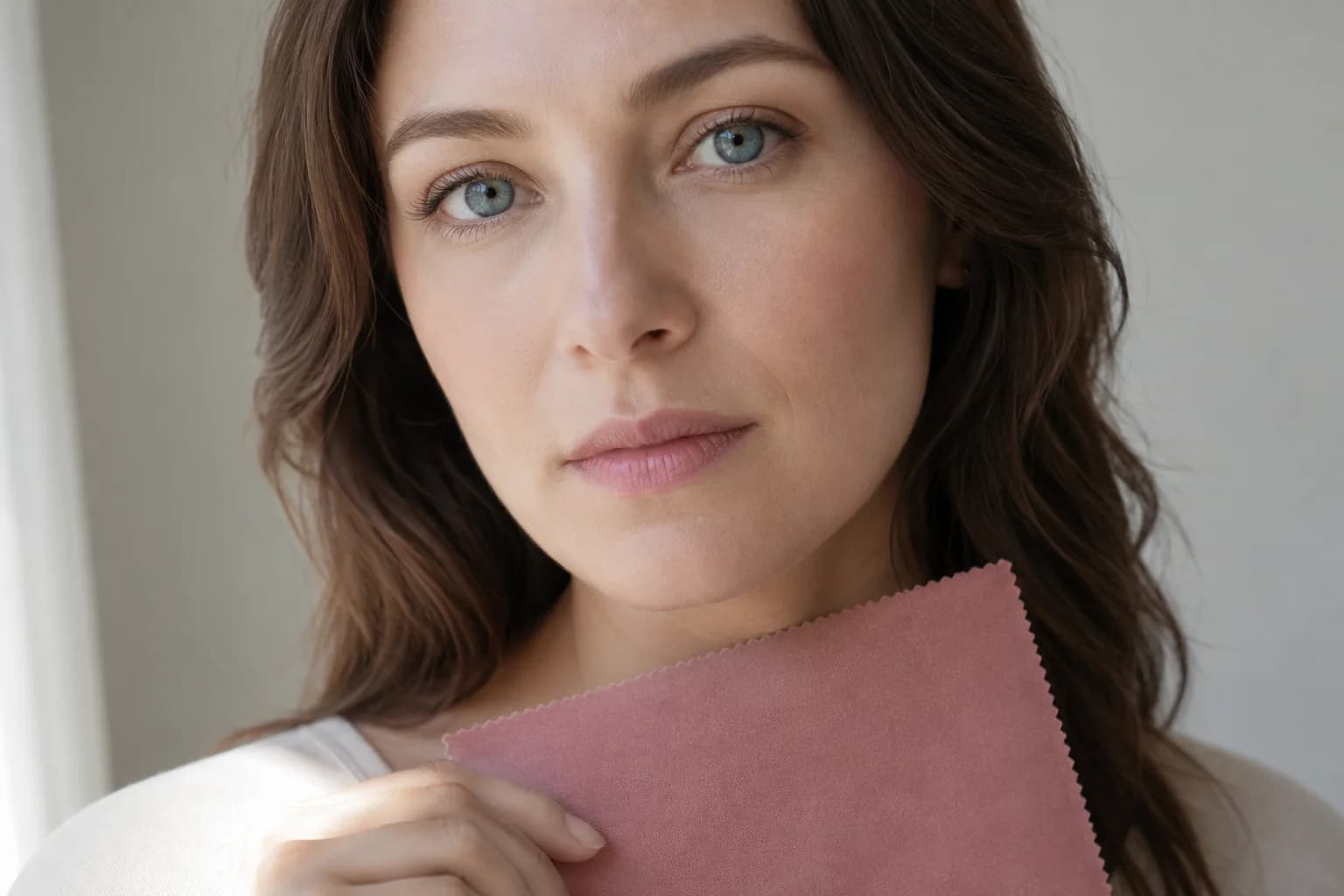
Color draping is a comparison method. You sit in front of a mirror under neutral, daylight-equivalent lighting — no makeup, hair pulled back. The analyst places one fabric swatch at a time beneath your chin, close to your face. They're not looking at the fabric. They're watching what happens to your skin.
Each swatch goes on, gets read, comes off. Two pieces are often held side by side. The analyst is looking for whichever one makes your complexion look more even and your overall appearance more alive.
It's a visual test, not a subjective one. The fabric either flatters or it doesn't — and under proper lighting, the difference is visible. This is what makes draping the gold standard for 16-season color analysis.
What a professional session looks like
A trained analyst works with 40–80 drapes across four color families: warm and cool versions of the same hue, ranging from light to deep and muted to clear. Most sessions open with a simple gold-versus-silver test to establish temperature direction, then narrow down from there.
What the analyst watches for: how shadows fall on your face, whether skin looks more even or blotchy, whether your teeth read whiter or yellower, whether lines and imperfections recede or become more visible. The differences are often subtle — a trained eye catches what an untrained one misses entirely.
Sessions typically run 60–90 minutes and cost $150–$400+. The result is a personalized season assignment, usually with notes on your specific coloring and which shades within your season work best.
Why it works: simultaneous contrast
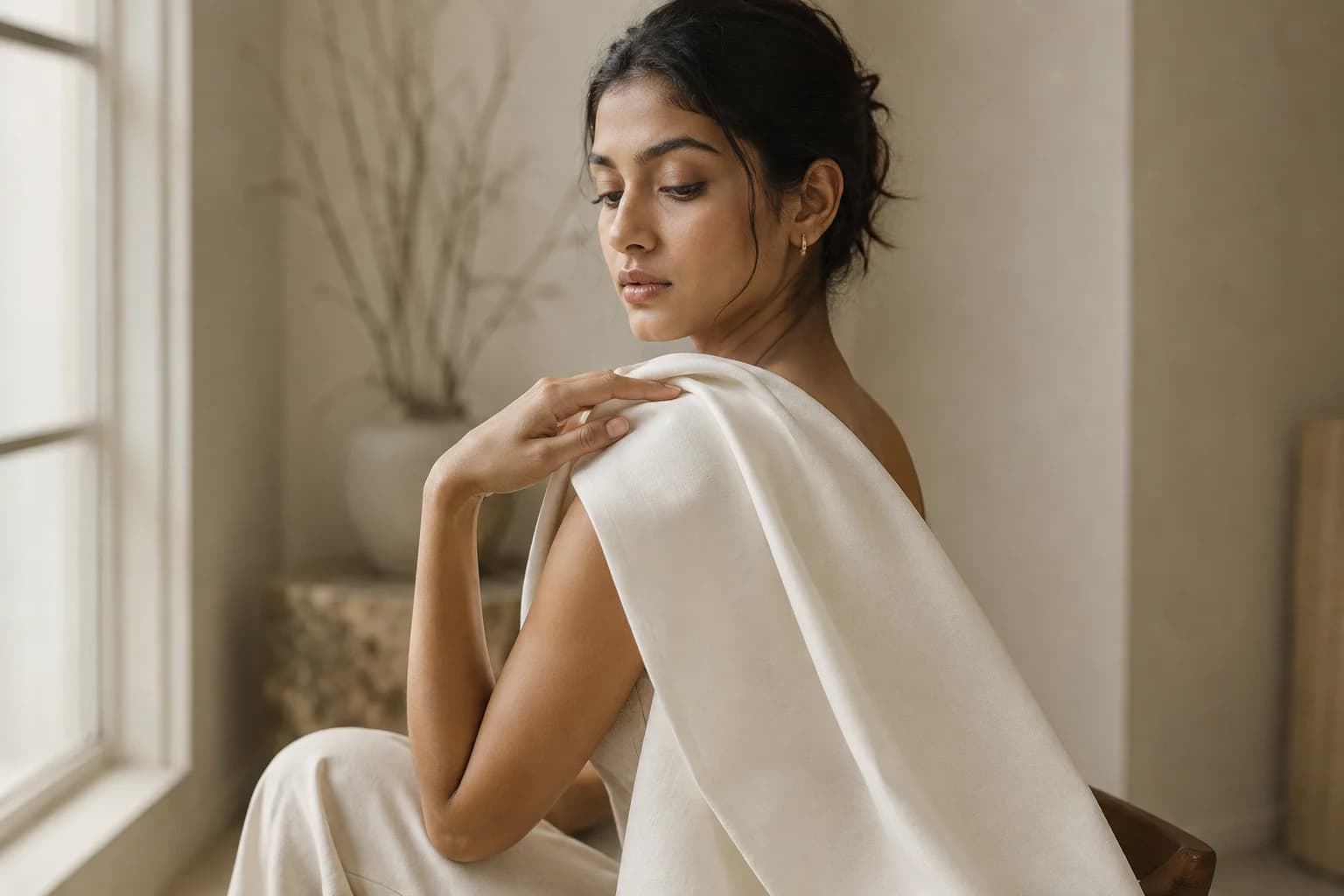
Every color has an undertone — warm (yellow-based), cool (blue-based), or neutral. Your skin, hair, and eyes also have undertones. When the fabric near your face shares your undertone, the colors in your complexion amplify. Skin looks clearer, the overall effect more cohesive.
When the undertone clashes, the reverse happens: shadows deepen, unevenness becomes more visible, and the impression flattens. This is simultaneous contrast — colors affect each other when placed in proximity. It's why the same garment can look completely different on a hanger versus against your face.
Draping tests this effect directly. Rather than relying on self-assessment of undertone (which is notoriously difficult), it lets you observe the outcome. If you want to understand the four axes draping measures, the undertone guide covers the mechanics in detail.
What's in a color analysis draping kit
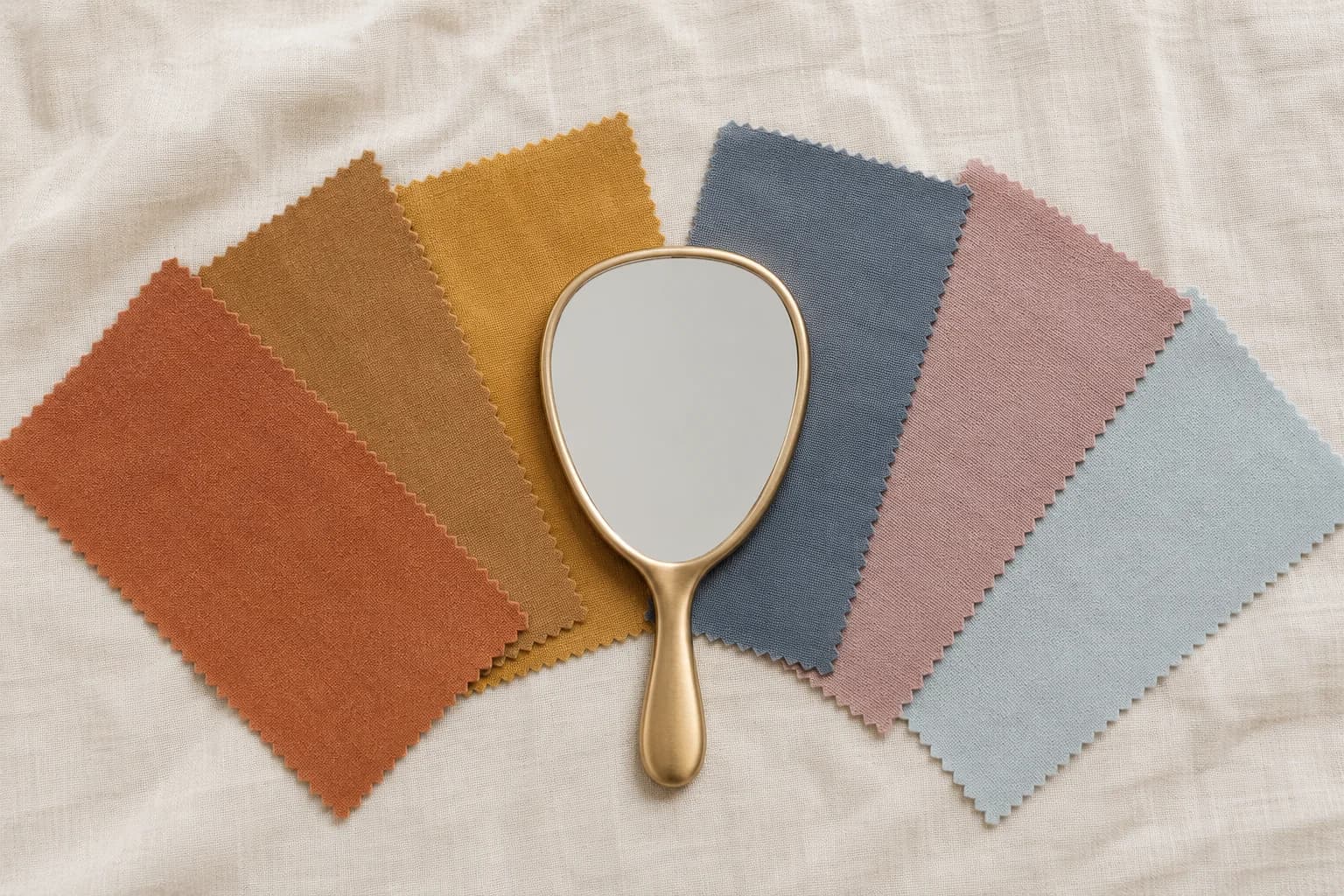
A proper color analysis draping kit contains fabric swatches sized large enough to drape over the shoulders — typically 12" × 18" or larger — in colors specifically chosen to reveal season. Most professional kits include:
White pair
A warm white (ivory/off-white) and a cool white (pure/bright white) — the fastest way to read temperature.
Metallic pair
Gold and silver. These also reveal temperature and often produce the clearest, most immediate visible difference.
Warm vs. cool versions of key hues
Orange-red vs. blue-red, warm yellow vs. cool lemon, warm teal vs. cool teal. Each pair targets a specific axis.
Depth range
Swatches from pale to very deep in both warm and cool directions, to test the depth axis.
Muted vs. clear swatches
Dusty, greyed versions of a color versus clear, bright versions — for testing chroma.
Commercial kits ($40–$150) usually contain 20–40 swatches in a specific color family. They're useful for refining a known result — confirming whether you're a Soft Summer or True Summer, for example — but a single-family kit won't identify your season from scratch.
How to DIY color draping at home
You don't need a formal kit. Solid-colored fabric scraps or scarves from a thrift store work well. What matters is having pieces large enough to drape near your face and a good contrast between the pairs you're testing.
Setup: natural daylight — next to a window around midday. No overhead warm LEDs. Remove makeup. Pull your hair back or cover it so it doesn't influence the read. Sit in front of a mirror, or have someone observe while you hold each piece.
Start with the temperature test: hold ivory fabric on one side of your face, pure bright white on the other. Which side looks more even? That's your direction — warm toward the ivory, cool toward the white. Then repeat with gold versus silver.
Don't stare at individual pieces in isolation — the contrast between two pieces side by side is more instructive than any single drape. Trust your first impression; it's usually the clearest read.
Digital draping: does it work?
Digital draping tools use photos or AI to simulate the effect of fabric near your face. The results are unreliable. Screen colors vary between devices, and photos can't replicate how fabric reflects actual light. The photo's white balance alone can throw off how your undertone reads.
A quiz avoids the screen problem, since it asks about your coloring instead of rendering it, but it has its own weak spot: it relies on how well you can judge your own undertone and contrast. Neither replaces real fabric in daylight. What a quiz does give you is a usable starting point without owning any fabric at all.
If you're curious whether color analysis is accurate enough to be worth it, the honest answer covers what it actually delivers versus what it doesn't.
Frequently asked questions
What is a color analysis draping kit?
A set of colored fabric swatches used to test how colors interact with your skin, hair, and eyes. Professional kits run 20–80 swatches across warm and cool families. Consumer versions ($40–$150) are available online — useful for refining a known result, but a single-season kit won't identify your season from scratch.
Can I do color draping at home without a kit?
Yes. Any solid-colored fabric works. Focus on contrast pairs: ivory vs. bright white, gold vs. silver, warm orange-red vs. cool blue-red. The comparison between pieces is what reveals your undertone — you don't need specialized fabric to run a useful test.
How many drapes do you need for color analysis?
A professional analyst uses 40–80 drapes to narrow down all 16 seasons. For a DIY test focused on temperature (warm vs. cool), 6–8 pieces covering the main contrast pairs is enough to get a reliable read.
Is digital draping as accurate as in-person draping?
No. Screen rendering can't replicate fabric under natural light, and photo quality significantly affects results. In-person draping with real fabric in daylight is more reliable.
Free · 3 minutes · No signup
Find Your Season
Take the free quiz and get your 16-season result. No fabric swatches required — just 10 questions about your natural coloring.
Take the free quiz →